Everyday elegance
7–8mm freshwater or Akoya studs balance presence and ease.
Shop everyday pearls
The pearl guide
Not sure which pearl gives you the best value? Here is a short guide to where each one comes from, how large it grows, and what it is best for.

01 · Everyday
Soft · versatile · everyday
Grown in lakes and rivers, most often in China, freshwater pearls are the most versatile of the four. They come in soft natural pastels and a wide range of shapes, which makes them the easiest way to begin, and the easiest to wear every day.
02 · Classic
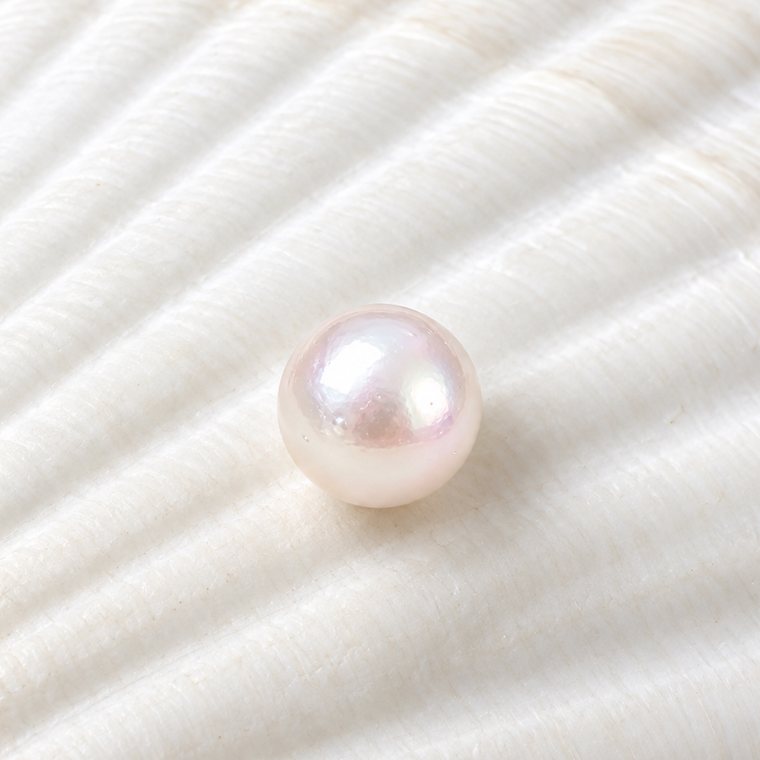
Crisp · luminous · classic
The classic round white pearl. Akoya pearls are grown in saltwater off Japan by the Pinctada fucata oyster, and are prized for their crisp, mirror-like luster. They are the traditional choice for bridal strands and first fine pearls.
03 · Statement
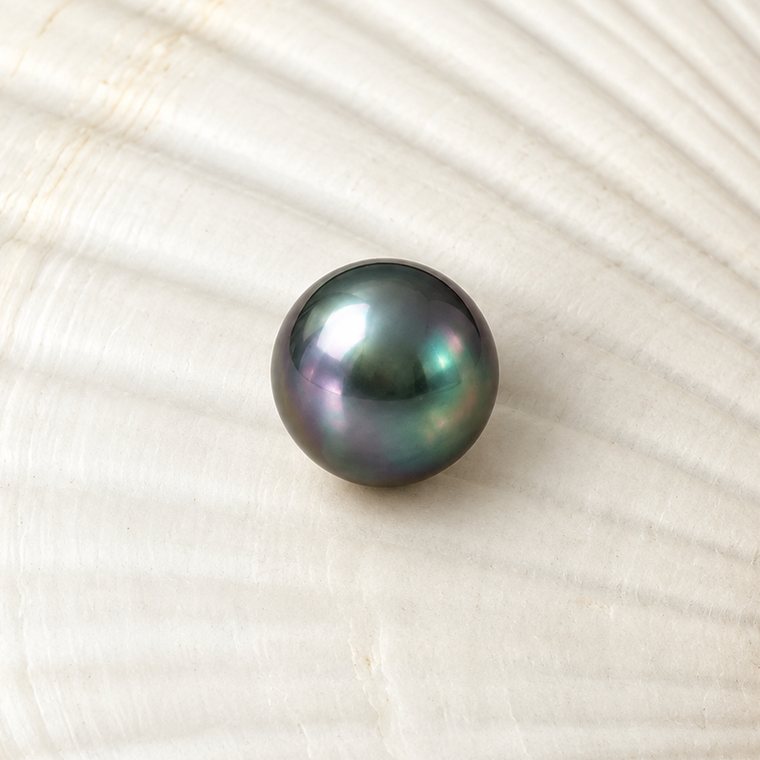
Dark · peacock · expressive
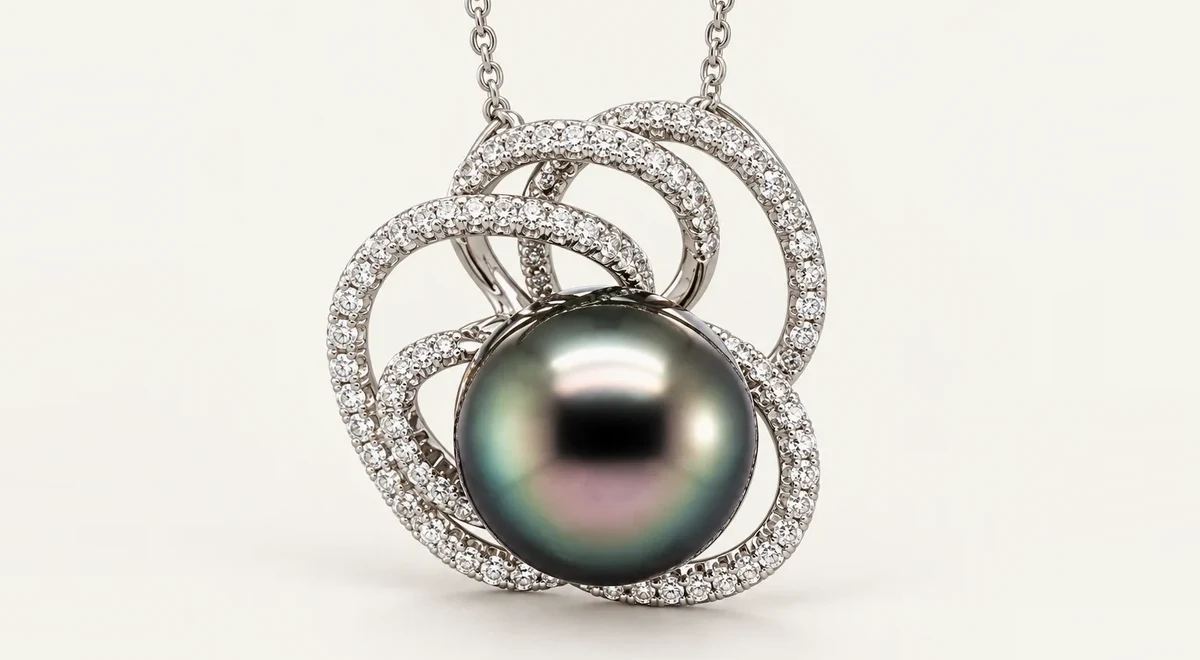
Naturally dark pearls grown in the lagoons of French Polynesia by the Pinctada margaritifera oyster. Their body colors run from charcoal and silver to peacock green and aubergine, which makes them a striking, modern choice.
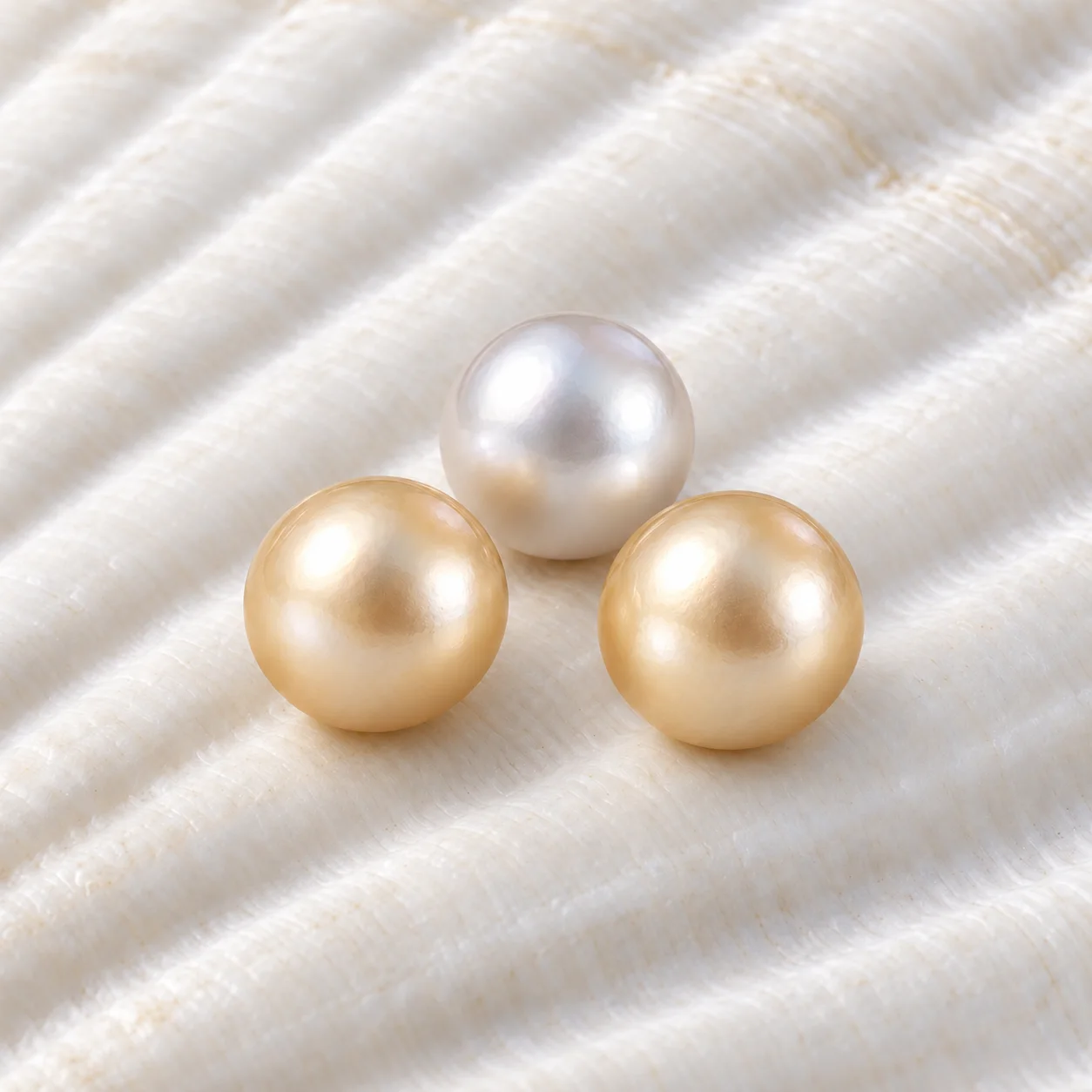
04 · Heirloom
Large · rare · luxurious
The largest and rarest of the four, grown by the Pinctada maxima oyster. White South Sea pearls come mainly from Australia and Indonesia, golden ones mainly from the Philippines, each with a deep, satiny glow.
Body color and overtone
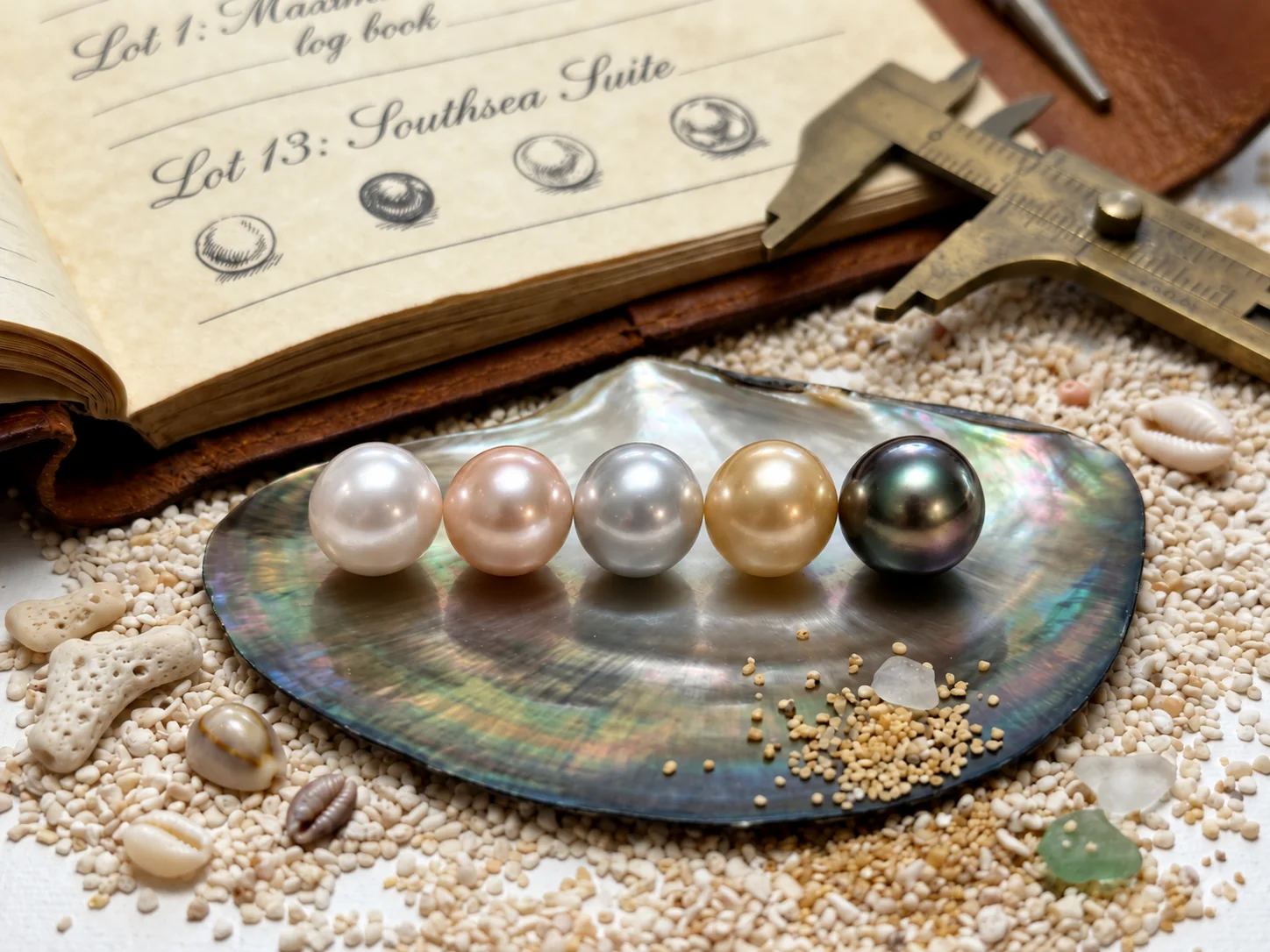
Body color comes from the mollusc and the water it grows in. Every saltwater pearl we sell is its natural color, never dyed: white and rose from Akoya, silver and gold from South Sea, and the dark greens and aubergines of Tahitian.
The decision clients take longest over
Pearls are measured across their widest point, in millimetres. Every pearl below is drawn to the same scale, so you can compare sizes side by side.

One millimetre sounds small, but a pearl is a sphere, so it adds up quickly. As a rule of thumb, two millimetres roughly doubles how large a pearl looks. Compare the 8 mm and the 10.5 mm above.
There is no official pearl grade. No laboratory issues the letters AA, AAA or AAAA, and no authority checks them, so every seller writes its own scale and the same letters can mean different pearls in different shops. A grade is only as good as the standard behind it. Here is ours, and how to check it for yourself.
01
Every pearl we buy is judged on the same seven things, in roughly this order of weight.
02
The grade on every piece is ours, written and applied by us. We publish it so you can hold us to it.
| AA+ | AAA | AAAA | |
|---|---|---|---|
| Luster | Bright, edges slightly soft | Bright and sharp | Mirror-like |
| Surface | 85–95% clean | At least 95% clean | At least 98% clean |
| Shape | Near-round, or true to its stated shape | Round, or true to its stated shape | Round, or true to its stated shape |
| Nacre | Medium | Visibly thick | Thick |
| Matching | Good | Very good | Excellent |
For Tahitian and South Sea pearls we describe the surface rather than score it. They are grown in far smaller numbers, so a matched strand almost always carries a few marks, and a percentage cannot tell you whether a mark matters. A faint pinpoint on the back of a pearl and a deep pit on its face are not the same thing, so we tell you which it is.
03
Two kinds of independent paperwork exist, and they answer different questions.
04
This works on any pearls, from any seller. Judge the piece as worn first, in daylight or ordinary room light at arm's length, before you look closely.
01
Each type has its own character, so this choice comes first.
02
A couple of millimetres changes a lot: about 2mm makes a pearl look roughly twice as large. These are the sizes most clients settle on, though none is a hard rule.
| Pearl | Classic size |
|---|---|
| Akoya | 7.0–7.5mm, or 8.0–8.5mm for more presence |
| Freshwater | 7.5–8.0mm |
| Tahitian | 8.0–11.0mm |
| South Sea | 10.0–14.0mm |
03
Shorter strands read more relaxed, longer ones more formal. 16 and 18 inches are the most worn by far, and anything from about 35 inches can be doubled or knotted.
Falls just below the collarbone. The classic first strand, and our default length.
04
We knot on silk between every pearl, so they never rub and a break never scatters the strand. Silk relaxes with wear, so check out our restringing service when your strand needs it; there is a fee.
Restringing7–8mm freshwater or Akoya studs balance presence and ease.
Shop everyday pearlsAkoya offers crisp, classic luster that photographs beautifully.
Shop bridal pearlsTahitian pearls in peacock or silver overtone make a confident impact.
Shop statement pearlsSouth Sea pearls in white or golden carry timeless weight and value.
Shop giftsA pearl is the only gem made by a living animal: layers of calcium carbonate held in an organic binder. That makes it softer than most gems and sensitive to acids, but it does not make it fragile. Pearls are harmed by what touches them, not by how often they are worn. Worn well, they last for generations.
01
02
03
Almost always, a soft cloth is the whole answer. For routine care, wipe with a soft, lint-free cloth, lightly dampened if needed, and lay the piece flat to dry. For heavier cleaning, use lukewarm water with a very small amount of mild soap on the cloth, not on the pearls, rinse the cloth rather than the strand, and dry flat. Dullness is damage to the nacre itself; no cleaning will restore it.
Never, with no exceptions
04
05
06
Our strands are knotted on silk between every pearl, so the pearls never rub and a break never scatters them. Very small or graduated strands are sometimes knotted at the clasp only, which is normal. Silk relaxes with wear and absorbs skin oils, so with frequent wear a strand wants restringing about once a year, far less often with occasional wear. Never wash the thread; water stretches the knots.
Time to restring when you notice:
We offer restringing for a fee. Bring your strand to the gallery or send it by insured post.
Restringing and repair