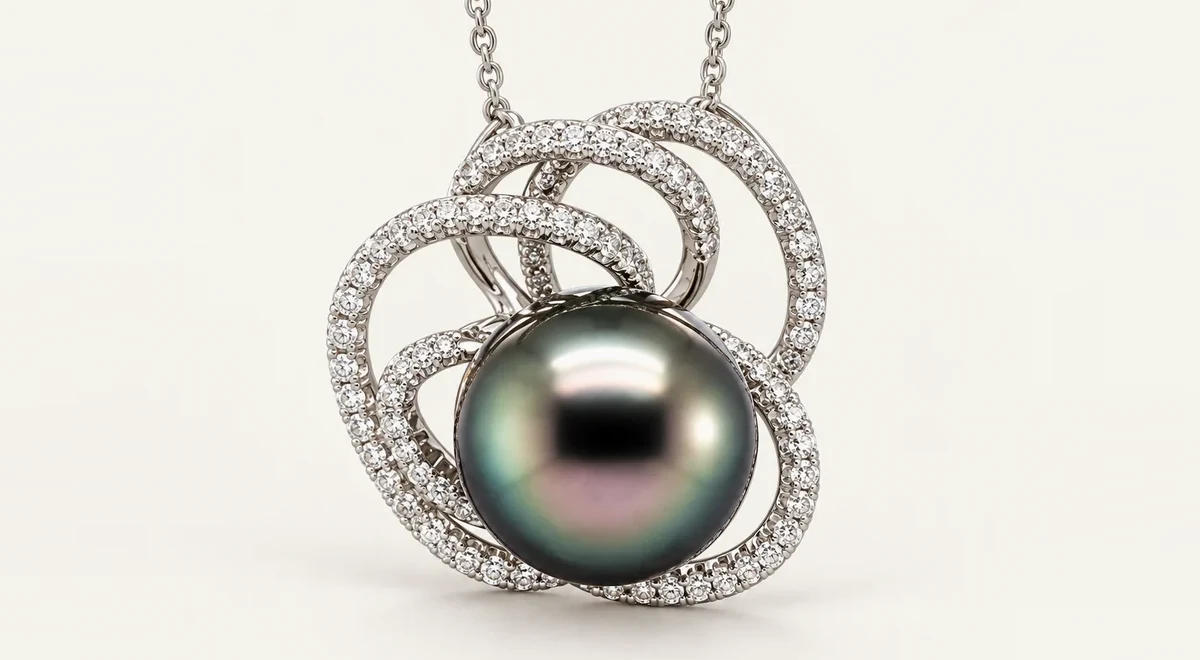
Decoding the Glow: A Complete Guide to How Pearls are Graded

When we think of diamonds, we think of the "4Cs." But when it comes to pearls, the rules change. Because pearls are organic gemstones—created by living mollusks rather than forged in the earth's crust—grading them is more of an art than a rigid science.
Whether you are investing in a timeless strand of Akoya pearls or looking for a statement South Sea piece, understanding how pearls are graded will help you ensure you’re getting the best quality for your budget.
Here is the breakdown of the five key pillars of pearl grading.
1. Luster: The "Heartbeat" of the Pearl
If you take away only one thing from this guide, let it be this: Luster is the most important factor in pearl grading.
Luster refers to the reflection of light off the surface of the pearl. A high-luster pearl has a mirror-like quality; you can almost see your reflection in it. A low-luster pearl looks "chalky" or matte.
- Excellent Luster: Sharp, bright, and vivid reflections.
- Good Luster: Bright, but the reflections are slightly softer.
- Fair to Poor Luster: Dull or cloudy appearance.
Pro Tip: Always check luster in natural light. Artificial store lighting can often mask a dull pearl.
2. Surface Quality: The Beauty of Imperfection
No pearl is perfectly smooth, but the fewer the blemishes, the higher the grade. Gemologists look for "pits," "bumps," or "spots" on the surface.
- Clean: The surface is smooth and free of visible blemishes.
- Lightly Spotted: A few tiny imperfections are visible under magnification.
- Moderately to Heavily Spotted: Visible blemishes are apparent to the naked eye.
It is important to remember that because pearls are organic, a few tiny growth marks are natural. However, a "AAA" grade pearl will have a nearly flawless surface.
3. Shape: From Perfect Spheres to Artful Baroque
While the "perfect round" pearl is the most valuable and traditional, shape is often a matter of personal preference.
- Round: The gold standard for classic jewelry.
- Near-Round: Slightly off-center, but looks round at a glance.
- Oval/Teardrop: Often used for pendants or earrings.
- Baroque: These are non-spherical pearls. They are irregularly shaped and often viewed as "organic art." While traditionally graded lower than rounds, Baroque pearls are currently very trendy in high-fashion jewelry.
4. Color: More Than Just "White"
Pearl color is complex because it isn’t just about the base hue—it’s about the overtone.
- Base Color: This is the primary color (e.g., White, Cream, Silver, Gold, or Black).
- Overtones: These are the secondary colors that shimmer on the surface. Common overtones include pink, green, silver, and purple.
For example, a white pearl with a "rose overtone" is often highly prized for its warmth and femininity. The "best" color is subjective, but consistency is key—in a matching strand, every pearl should share the same base color and overtone.
5. Size: The Final Piece of the Puzzle
Pearls are measured in millimeters (mm). While larger pearls generally command higher prices, size is the only grading factor that does not necessarily correlate with quality.
A small pearl with an intense, mirror-like luster is far more valuable than a massive pearl with a dull, chalky surface. When shopping, prioritize luster and surface quality over raw size.
Summary Checklist for Your Next Purchase:
|
Feature |
What to look for |
Red Flag |
|
Luster |
Mirror-like reflection |
Dull, matte, or "chalky" |
|
Surface |
Smooth, clean skin |
Deep pits or large bumps |
|
Shape |
Symmetrical (unless Baroque) |
Unintended asymmetry |
|
Color |
Consistent hue & overtone |
Clashing colors in one strand |
|
Size |
Appropriate for the design |
Over-sized but low quality |
Final Thoughts
Grading pearls is about finding the balance between nature's unpredictability and human standards of beauty. Whether you prefer the precision of a perfectly round Akoya or the wild eccentricity of a Baroque South Sea pearl, knowing these five pillars ensures that your investment will glow for generations to come.